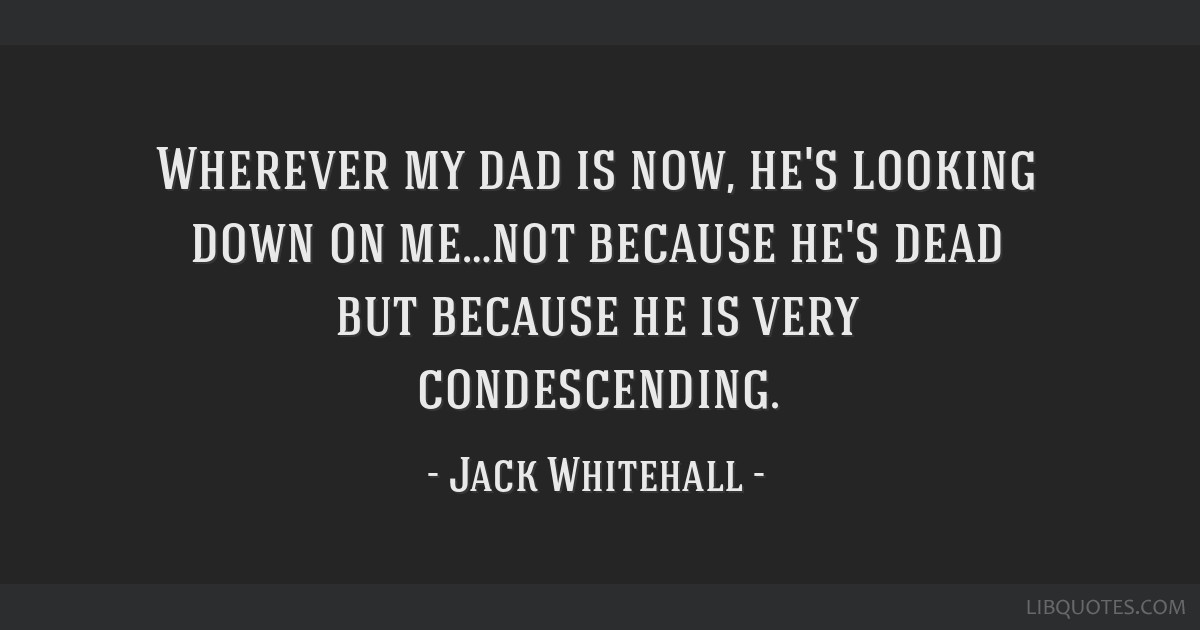
In a world saturated with performative sincerity, Jack Whitehall delivers truth wrapped in sarcasm. His now-iconic “I’m sure wherever my dad is, he’s looking down on us. He’s not dead, just very…” isn’t just a punchline—it’s a mirror held up to modern relationships, workplace dynamics, and the fragile masks we wear daily. This quote, often shared as a quote of the day, transcends comedy. It reveals how humor can expose deeper truths about honesty, family, and the absurdity of social expectations.
Whitehall’s relationship with his father, Michael, famously chronicled in Jack Whitehall: Travels with My Father, is the foundation of this statement. The irony isn’t lost: a son joking that his emotionally distant parent is “looking down” on him—spiritually, not literally—while very much alive. But beneath the surface, this quip unpacks layers relevant far beyond the family dinner table.
The Power of Comedic Truth-Telling
Jack Whitehall’s humor thrives on uncomfortable honesty. Where others might sugarcoat familial distance, he weaponizes it with precision timing and dry British wit. This quote, in particular, dissects the concept of presence—physical versus emotional.
“He’s not dead, just very…” implies absence despite proximity. Many recognize this: a colleague in the office but mentally checked out, a family member at the table but emotionally absent. Whitehall’s brilliance lies in naming it without accusation, letting laughter do the heavy lifting.
Real-life parallel: Imagine a manager who attends every meeting but contributes nothing meaningful. Employees feel observed, not supported. Like Whitehall’s father, they’re “looking down”—present in body, absent in impact.
This comedic framing makes the critique palatable. In leadership training, this phenomenon is known as passive presence—and it erodes team morale. Whitehall’s joke, then, doubles as workplace commentary.
Honesty Served Cold: Why We Laugh at Emotional Distance
The quote works because it’s universally relatable. Emotional unavailability isn’t unique to British fathers. It’s a global workplace and family issue.
Consider these scenarios: - A remote worker logged in but disengaged during video calls - A parent who attends school plays but spends the whole time on their phone - A leader who delegates but never follows up
These are modern forms of “looking down on us”—observing without connecting. Whitehall’s quote captures this with economy and sting.
What’s often missed is the vulnerability beneath the joke. By mocking his father’s detachment, Jack also reveals his own longing for connection. Comedy becomes a vessel for unspoken need.
Common mistake: Leaders assume visibility equals involvement. But showing up isn’t the same as showing care. Whitehall’s line reminds us that presence requires engagement, not just attendance.
Work Culture and the Myth of Constant Visibility
Modern work culture glorifies visibility. Open offices, mandatory camera-on policies, real-time messaging—these are often mistaken for collaboration. But Jack’s joke exposes a flaw: being seen doesn’t mean being useful.
In the post-pandemic hybrid work era, “looking down” has taken digital form: - Managers lurking in Slack channels without contributing - Executives joining Zoom calls to “monitor” rather than participate - Email chains where CC lists grow longer than the actual discussion
This surveillance-style presence mirrors Whitehall’s father—always watching, rarely helping.
Workflow tip: Audit your team’s meeting culture. Are leaders truly engaging, or just “looking down”? Replace passive observation with active support: - Rotate meeting facilitation - Set clear participation expectations - Encourage questions over monologues
Honesty in work culture means admitting when presence is performative. Whitehall’s humor invites that admission—with a laugh, not a lecture.
Human Nature and the Comedy of Expectations
Why do we expect emotional availability from people who’ve never offered it? That’s the crux of Whitehall’s joke. We project warmth onto those who’ve only ever been distant.
This ties into a broader human tendency: cognitive dissonance in relationships. We maintain relationships with emotionally unavailable people—parents, bosses, partners—while pretending they’re different than they are.
Whitehall doesn’t pretend. He names it. And in doing so, he disarms the tension.
Practical example: An employee stays late every night because the boss “values hard work.” But the boss never acknowledges it. The employee feels seen but unappreciated—exactly like being “looked down on.” Whitehall’s quote reframes this dynamic with dark humor, making it easier to confront.
Comedy, in this sense, is emotional hygiene. It lets us process disappointment without collapse.
The British Stiff Upper Lip — and Why It Fails
Whitehall’s humor is distinctly British: understated, ironic, and layered with repressed emotion. The quote critiques the very culture that shaped it.
The “stiff upper lip” ideal—don’t show emotion, don’t complain, just endure—has long governed British family and work life. But it’s crumbling under the weight of modern expectations for transparency and mental well-being.
His joke exposes the absurdity: - A father physically present but emotionally frozen - A leader who observes but never connects - A culture that rewards silence over honesty
Limitation of this mindset: Repressing emotion doesn’t eliminate it—it displaces it. In families, it breeds resentment. In workplaces, it kills innovation. Whitehall’s comedy highlights the cost.
Organizations that prize “calm under pressure” often end up with disengaged teams. True resilience isn’t silence—it’s the ability to communicate under stress. Jack’s quote, in its own way, calls for that shift.
From Joke to Insight: Applying Whitehall’s Wisdom
So how do we use this beyond a laugh?
Start by auditing your own “looking down” behaviors. Are you present—or just visible?
Use this checklist:
| Behavior | Are You Doing This? | Healthier Alternative |
|---|---|---|
| Attending meetings without speaking | ❏ | Share one insight per meeting |
| Monitoring messages without responding | ❏ | Acknowledge receipt with brief feedback |
| Praising effort only in private | ❏ | Recognize publicly when appropriate |
| Avoiding hard conversations | ❏ | Schedule a 1:1 to address issues |
Whitehall’s quote isn’t just about his dad. It’s about all of us who’ve been watched without being seen.
In leadership, parenting, or friendship—impact comes from engagement, not observation.
When Humor Reveals What Policy Cannot
Corporate handbooks won’t fix emotional disconnection. But a well-timed joke might.
Whitehall’s quote circulates as quote of the day material because it resonates across contexts. It’s shared in offices, group chats, and family texts—not just for laughs, but as shorthand for a shared experience.
That’s the power of comedic insight: it bypasses resistance. You can’t argue with a punchline.
When designing team culture workshops, consider using humor like Whitehall’s as a conversation starter. A single quote can open discussions that hours of training fail to unlock.
Realistic use case: A manager starts a team meeting by quoting Jack: “I’m sure wherever my dad is, he’s looking down on us. He’s not dead, just very…” Then asks: “When have you felt ‘looked down on’ without being supported? How can we fix that here?”
Suddenly, vulnerability isn’t forced—it’s invited.
Closing: Be Present, Not Just Visible
Jack Whitehall’s joke about his father isn’t just comedy. It’s a quiet call for authenticity—in families, in leadership, in human connection.
We all know someone who’s “looking down on us” without truly being there. The humor helps us name it. The lesson tells us to do better.
Stop valuing visibility over value. Replace observation with engagement. Let presence mean something.
Start today: in your next interaction, ask not just “Am I here?” but “Am I with them?”
That’s how you turn a quote of the day into a lifetime of change.
Frequently Asked Questions
What is Jack Whitehall’s most famous quote about his dad? His widely shared line is: “I’m sure wherever my dad is, he’s looking down on us. He’s not dead, just very…”—a humorous take on emotional distance.
Is Jack Whitehall’s dad actually alive? Yes, Michael Whitehall is alive. The quote plays on the irony of saying someone is “looking down” while still living.
What show features Jack Whitehall and his dad traveling together? Jack Whitehall: Travels with My Father, a Netflix docu-comedy series, follows their global trips and evolving relationship.
How does this quote relate to work culture? It highlights passive presence—being seen without contributing—common in leadership and remote work environments.
Why is this quote so relatable? It captures the universal experience of feeling observed but not understood, whether by family, managers, or institutions.
Can humor improve workplace honesty? Yes. Well-placed humor, like Whitehall’s, can break tension and open dialogue about otherwise awkward topics.
What lesson does the quote teach about human nature? That we often mistake presence for connection, and that emotional honesty—delivered through comedy or conversation—is essential for real bonds.
FAQ
What should you look for in Jack Whitehall’s Quote of the Day: Humor, Honesty, and Human Truths? Focus on relevance, practical value, and how well the solution matches real user intent.
Is Jack Whitehall’s Quote of the Day: Humor, Honesty, and Human Truths suitable for beginners? That depends on the workflow, but a clear step-by-step approach usually makes it easier to start.
How do you compare options around Jack Whitehall’s Quote of the Day: Humor, Honesty, and Human Truths? Compare features, trust signals, limitations, pricing, and ease of implementation.
What mistakes should you avoid? Avoid generic choices, weak validation, and decisions based only on marketing claims.
What is the next best step? Shortlist the most relevant options, validate them quickly, and refine from real-world results.