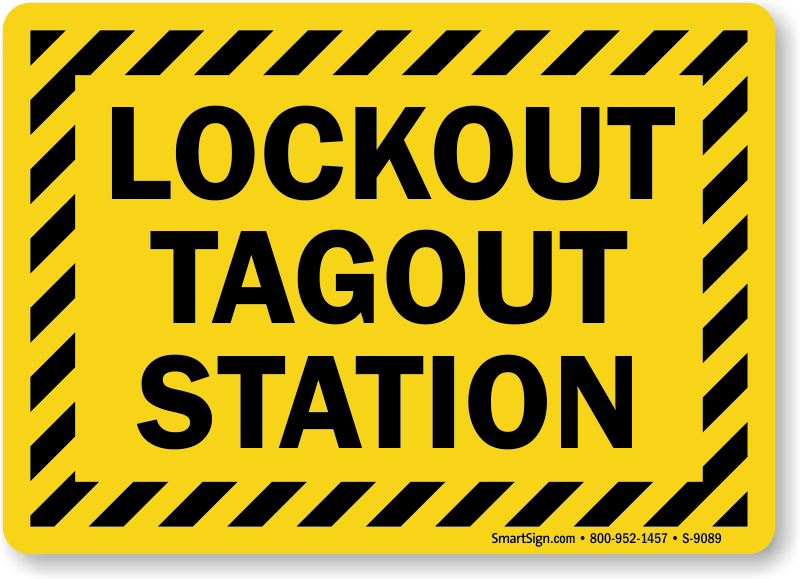
A technician approaches a locked-out conveyor belt in a manufacturing plant. The lock is in place, but the tag is faded, missing the operator’s name, and lacks explanation of the hazard. Is it safe to remove? Without complete, legible, and standardized lockout tagout tags, that simple question becomes a liability.
Lockout tagout (LOTO) tags aren’t just accessories to a safety procedure—they’re frontline communication tools. When properly designed and used, they prevent accidental energization, protect maintenance workers, and ensure OSHA compliance. But not all tags are created equal. Lockout tagout tags must have specific physical, informational, and procedural characteristics to be effective.
Below are the non-negotiable features every LOTO tag must include, backed by regulatory standards and real-world safety outcomes.
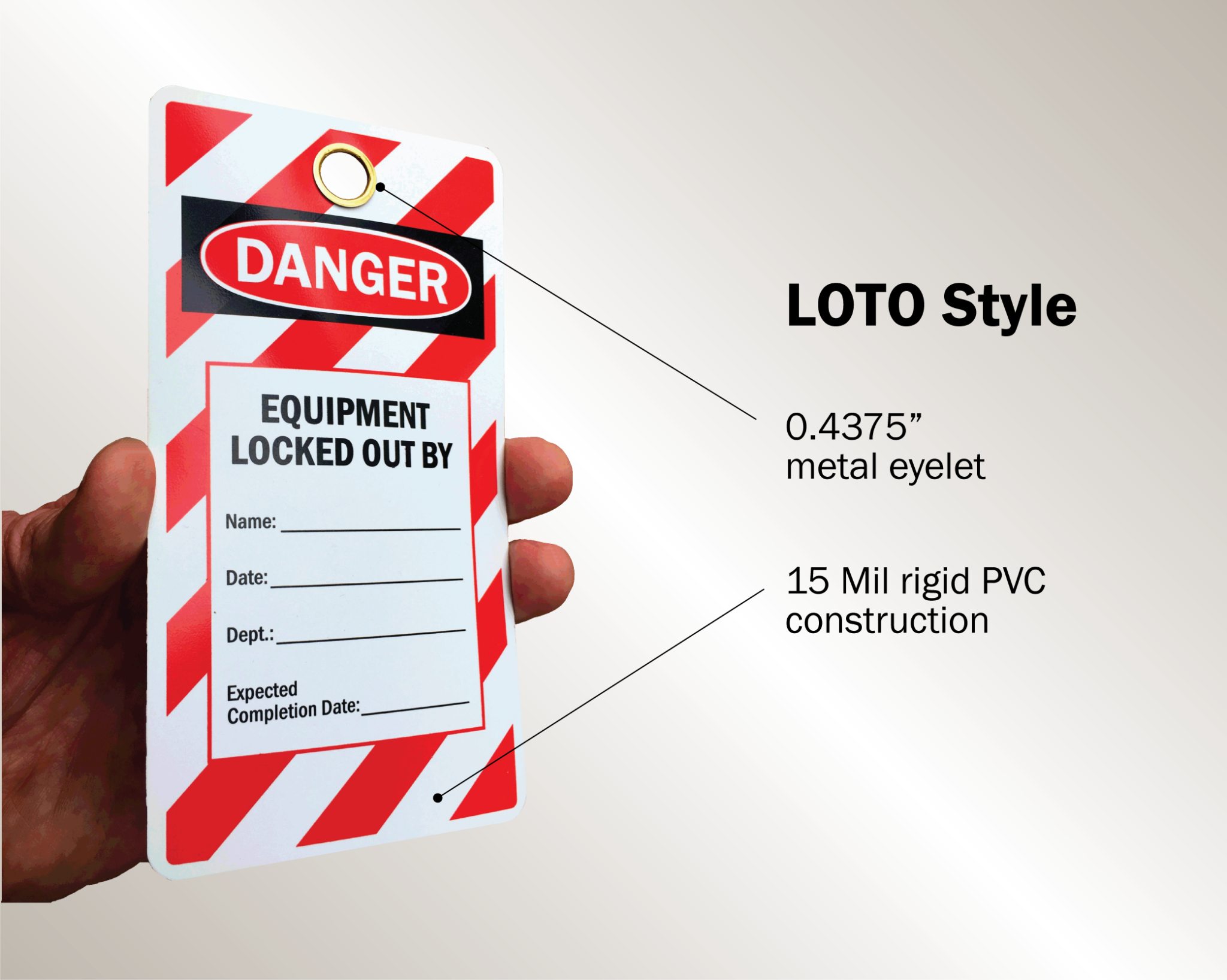
1. Clear Identification of the Authorized Employee
Every tag must display the name of the employee who applied the lockout device. This isn’t a formality—it’s accountability.
When a machine is down for maintenance, multiple personnel might be involved. If a tag lacks an identifiable name, confusion arises about who initiated the lockout and who has the authority to remove it.
Common mistake: Using generic tags that say “Do Not Operate” without a name. This undermines the entire LOTO procedure.
Best practice: - Use pre-printed name fields or write-in tags with permanent markers. - Combine with photo ID tags in high-turnover environments. - Ensure names are legible and not abbreviated (e.g., “J. Smith” instead of “JS”).
In an audit, OSHA will check that each tag is linked to a specific employee. A missing or illegible name is a frequent citation trigger.
2. Explicit Hazard and Energy Source Information
A tag must clearly state why the equipment is locked out. General warnings like “Under Maintenance” are insufficient.
Lockout tagout tags must have details such as: - Type of energy controlled (electrical, hydraulic, pneumatic, thermal, chemical) - Specific hazard (e.g., “High Voltage Risk,” “Stored Pressure”) - Work being performed (e.g., “Motor Replacement,” “Guard Repair”)
Real-world example: A chemical plant technician locks out a valve for cleaning. The tag reads: > “LOCKED OUT – Chemical Line Flushing – High Pressure & Toxic Exposure Risk – John M. Rivera, Maintenance.”
This instantly communicates danger, scope, and responsibility—critical for contractors or shift workers unfamiliar with the task.
Limitation to watch: Over-reliance on symbols alone. While ISO-standard icons help, text must accompany them for full clarity, especially in multilingual workplaces.
3. Durable, Tamper-Resistant Material
LOTO tags face harsh environments—moisture, grease, UV exposure, and mechanical stress. Flimsy paper tags disintegrate after one shift.
Tags must be made from: - Laminated polyester - Vinyl - Polypropylene
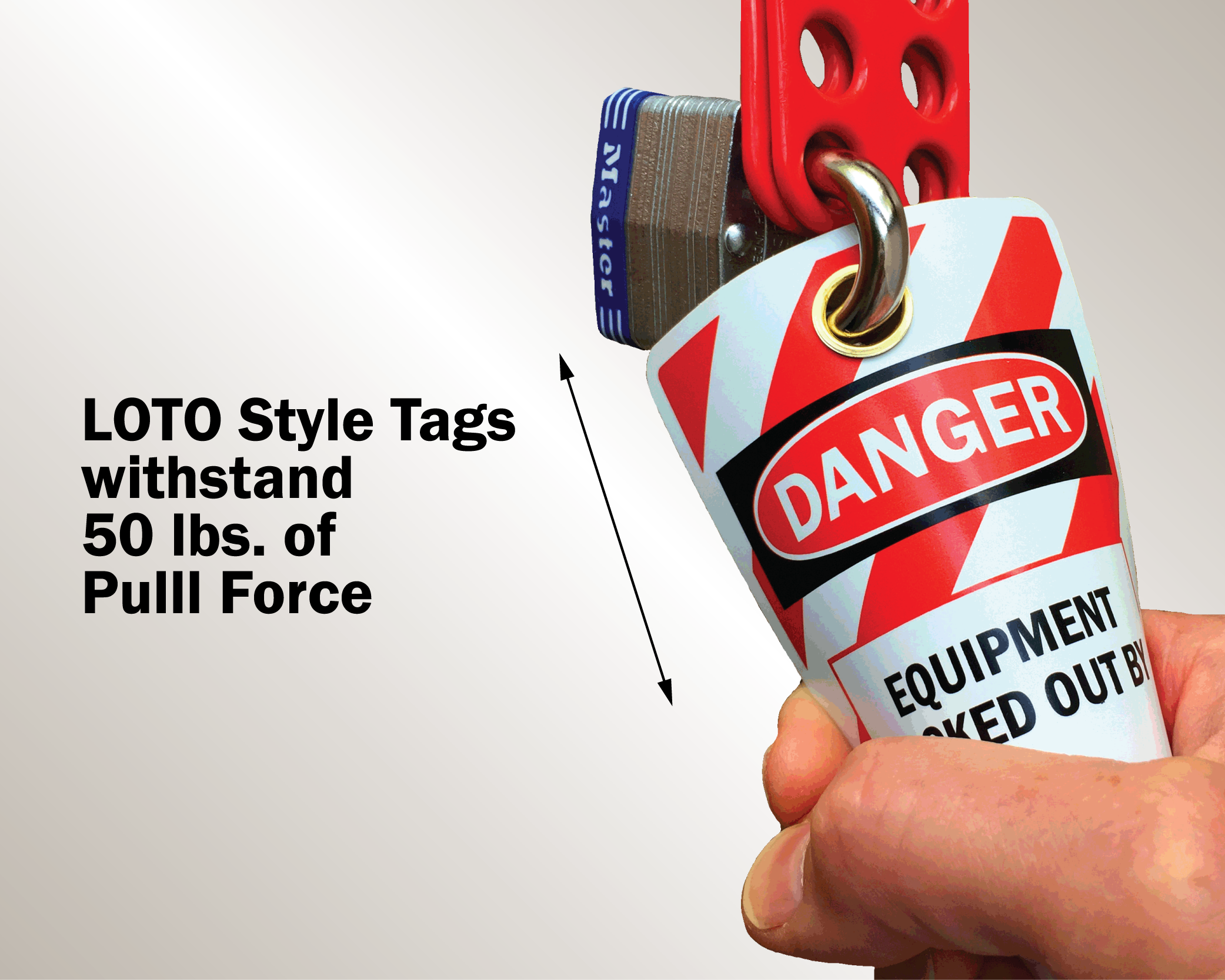
These materials resist tearing, fading, and chemical damage. Metal tags with engraved text are used in extreme environments like foundries or offshore platforms.
Workflow tip: Test tag durability by leaving a sample in the field for a week. If it’s unreadable, it’s not fit for use.
Also, the attachment point (e.g., hole or loop) must withstand force. A frayed tag that falls off renders the lockout visually incomplete.
4. Standardized Warning Language and Design
Consistency prevents confusion. Tags across a facility should follow a uniform layout, color, and phrasing.
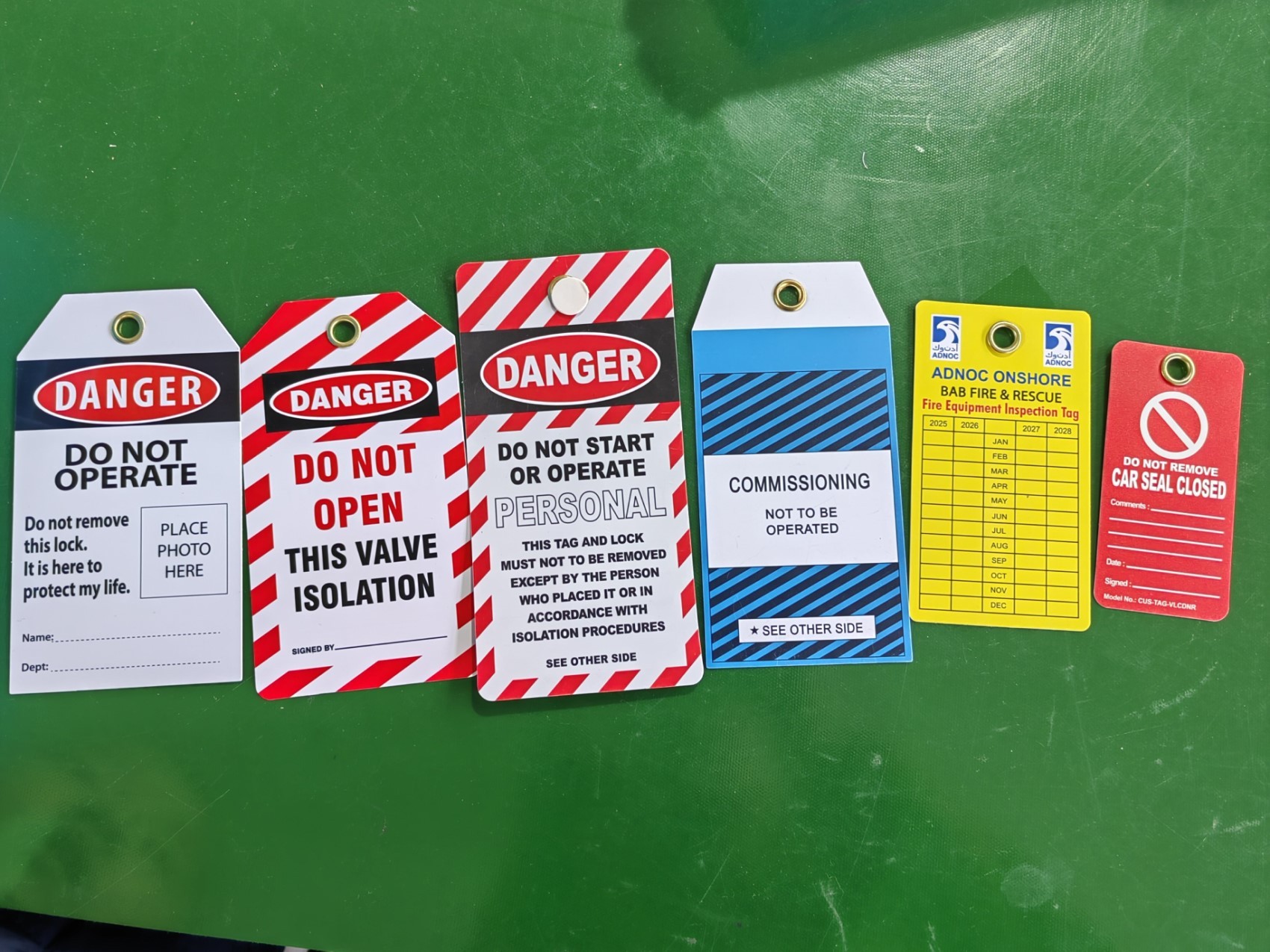
OSHA 29 CFR 1910.145 recommends: - Red for danger (primary hazard) - Yellow for caution - Mandatory language such as: - “DO NOT START” - “DO NOT OPERATE” - “DO NOT OPEN” - “EQUIPMENT LOCKED OUT – AUTHORIZED PERSONNEL ONLY”
Pro insight: Use bold, high-contrast text. Avoid cursive fonts or decorative elements. The largest text should be the warning—not the company logo.
In multilingual workplaces, include secondary language warnings (e.g., English/Spanish). But never sacrifice primary visibility for translation density.
5. Unique Serial Numbers or Tracking Codes For large facilities or complex systems, tags must have traceable identifiers.
Serial numbers allow: - Audit trail creation - Incident investigation - Removal verification
Example use case: During a plant-wide shutdown, 37 locks are applied. Later, a discrepancy arises—only 36 tags are accounted for. The missing serial number triggers a search, preventing premature re-energization.
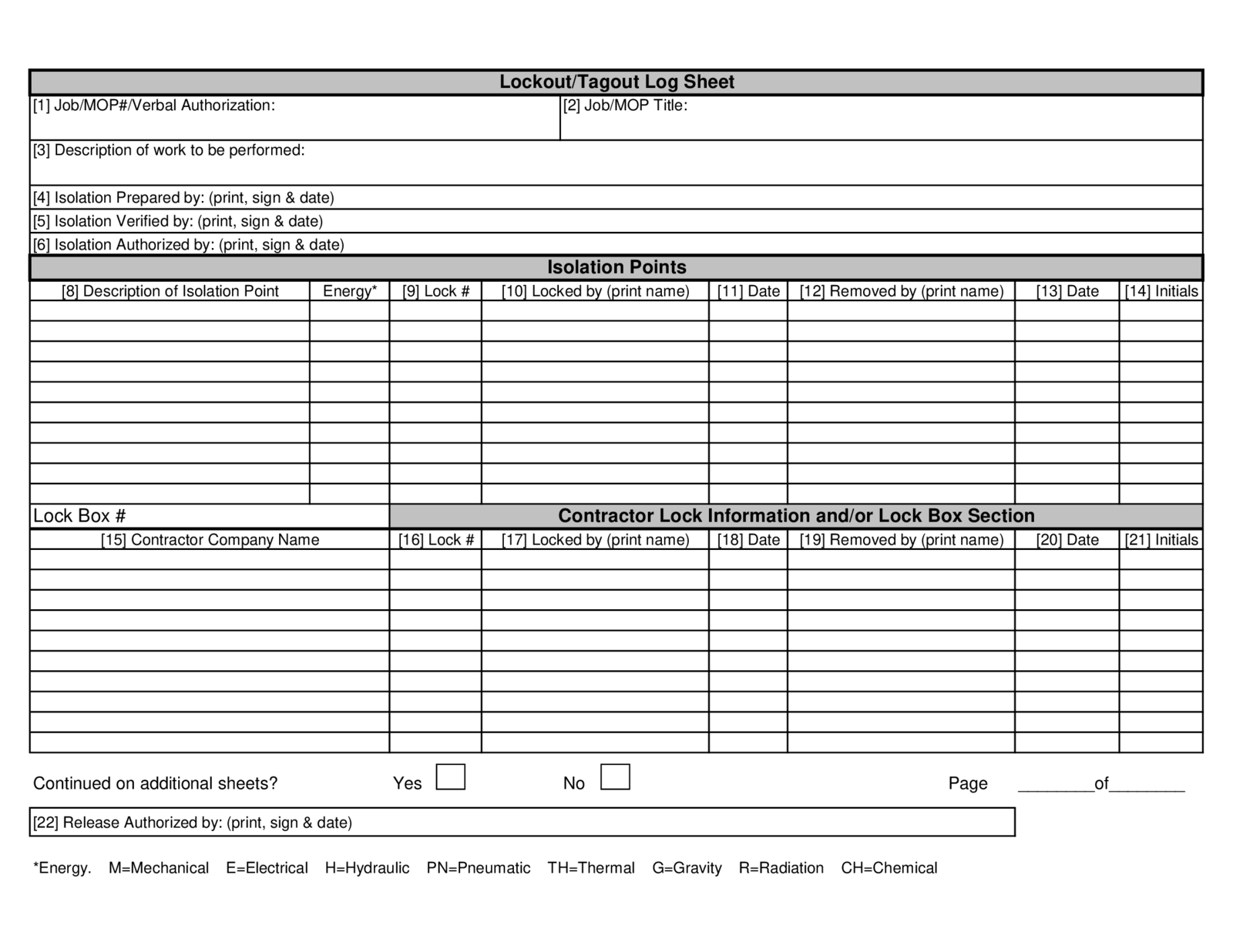
Implementation tip: Pair serialized tags with a LOTO logbook or digital system. Each entry includes: - Tag number - Employee name - Equipment ID - Date/time - Reason
This transforms tags from passive warnings into active control points.
6. Compliance with OSHA and ANSI Standards
Lockout tagout tags aren’t optional—they’re legally mandated.
Key requirements from OSHA 29 CFR 1910.147 and ANSI Z535.5: - Tags must be affixed securely to the energy-isolating device. - Must not be used for other purposes (e.g., general instructions). - Must withstand environmental conditions for the duration of the lockout. - Must clearly state that equipment is not to be operated.
Pitfall to avoid: Using “tag only” systems without locks. Tags alone do not provide physical security. OSHA requires a lock whenever possible. Tags complement locks—they don’t replace them.
7. Integration with Broader LOTO Procedures
A tag is only as strong as the system behind it.
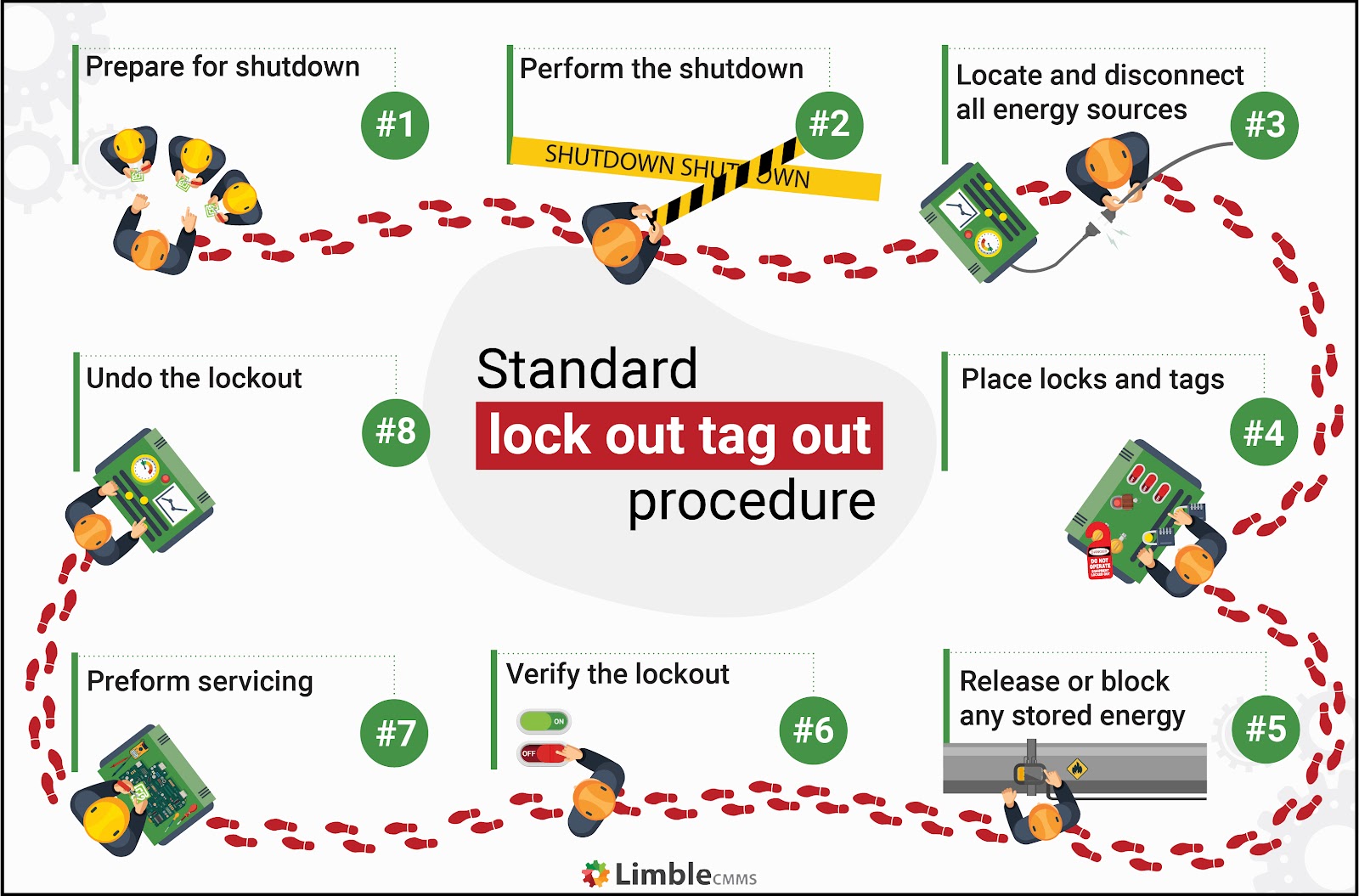
Lockout tagout tags must be part of a documented energy control program that includes: - Employee training (authorized vs. affected workers) - Periodic inspections (at least annually) - Machine-specific procedures - Lockbox or group lockout protocols
Reality check: A well-designed tag on the wrong valve creates a false sense of security. Tags must align with written LOTO procedures reviewed and tested regularly.
Pro tip: Conduct “tag walks” monthly—inspect tags in the field against procedure documents. Look for: - Mismatched equipment IDs - Expired durations - Missing signatures
This proactive check catches drift before it causes failure.
Top 5 LOTO Tag Options That Meet Compliance Standards
Not all commercial tags deliver on durability and clarity. Here are five field-tested options that lockout tagout tags must have to perform:
| Product | Material | Key Features | Best For |
|---|---|---|---|
| Brady B-LOTO-S1 | Polyester | Pre-printed warnings, serial numbers, write-on area | High-volume industrial use |
| Grainger 4ZCD1 | Laminated paper-plastic hybrid | Low-cost, OSHA-compliant text | Small facilities, occasional use |
| Seton 34690 | Vinyl | Weatherproof, dual-language (EN/ES), reinforced hole | Outdoor or chemical environments |
| Master Lock 1551T | Polyester | Lock-compatible loop, bold red/yellow design | Training environments |
| 3M DBS-100 | Durable synthetic | Tamper-evident, scuff-resistant | High-security or regulated industries |
Choose based on environment, language needs, and integration with existing lock systems.
Avoid These 3 Common LOTO Tag Failures
Even compliant tags can fail in practice. Watch for:
- Ghost Tags – Tags left on equipment after work is complete. This erodes trust in the system.
- Blank or Partial Tags – Missing names, dates, or hazard info. These are functionally useless.
- Poor Placement – Tags obscured by grease, behind panels, or not attached to the lock.
Corrective action: Implement a “tag audit” during shift handoffs. Remove any unattended or expired tags immediately.
Final Word: Tags Are Messages, Not Just Labels
Lockout tagout tags must have more than compliance checkboxes—they must communicate urgency and ownership in moments of risk.
A faded, generic tag is a liability. A clear, durable, and personalized tag is a shield.
When selecting or designing LOTO tags, ask: - Would this tag stop someone unfamiliar with the task? - Can it survive the environment for the full duration? - Does it answer who, why, and what at a glance?
Build your program around tags that meet these demands. Lives depend on the details.
FAQ What must be on a lockout tagout tag? Name of employee, reason for lockout, type of hazard, warning language, and equipment ID.
Can you use tape to attach a LOTO tag? No—tags must be securely attached using non-reusable ties or built-in loops. Tape is not tamper-proof.
Do LOTO tags expire? They don’t have set expiration, but must be removed immediately after work is done.
Are digital LOTO tags acceptable? Only if they’re paired with physical locks and visible in real time (e.g., QR codes linked to live status).
Can multiple people use the same tag? No—each authorized employee must apply their own lock and tag.
Must LOTO tags be red? OSHA recommends red for danger, but the key is high visibility and standardization.
Can you reuse LOTO tags? Only if they’re undamaged, legible, and reissued by the same employee for a new lockout.
FAQ
What should you look for in Lockout Tagout Tags Must Have These Critical Features? Focus on relevance, practical value, and how well the solution matches real user intent.
Is Lockout Tagout Tags Must Have
These Critical Features suitable for beginners? That depends on the workflow, but a clear step-by-step approach usually makes it easier to start.
How do you compare options around Lockout Tagout Tags Must Have These Critical Features? Compare features, trust signals, limitations, pricing, and ease of implementation.
What mistakes should you avoid? Avoid generic choices, weak validation, and decisions based only on marketing claims.
What is the next best step? Shortlist the most relevant options, validate them quickly, and refine from real-world results.