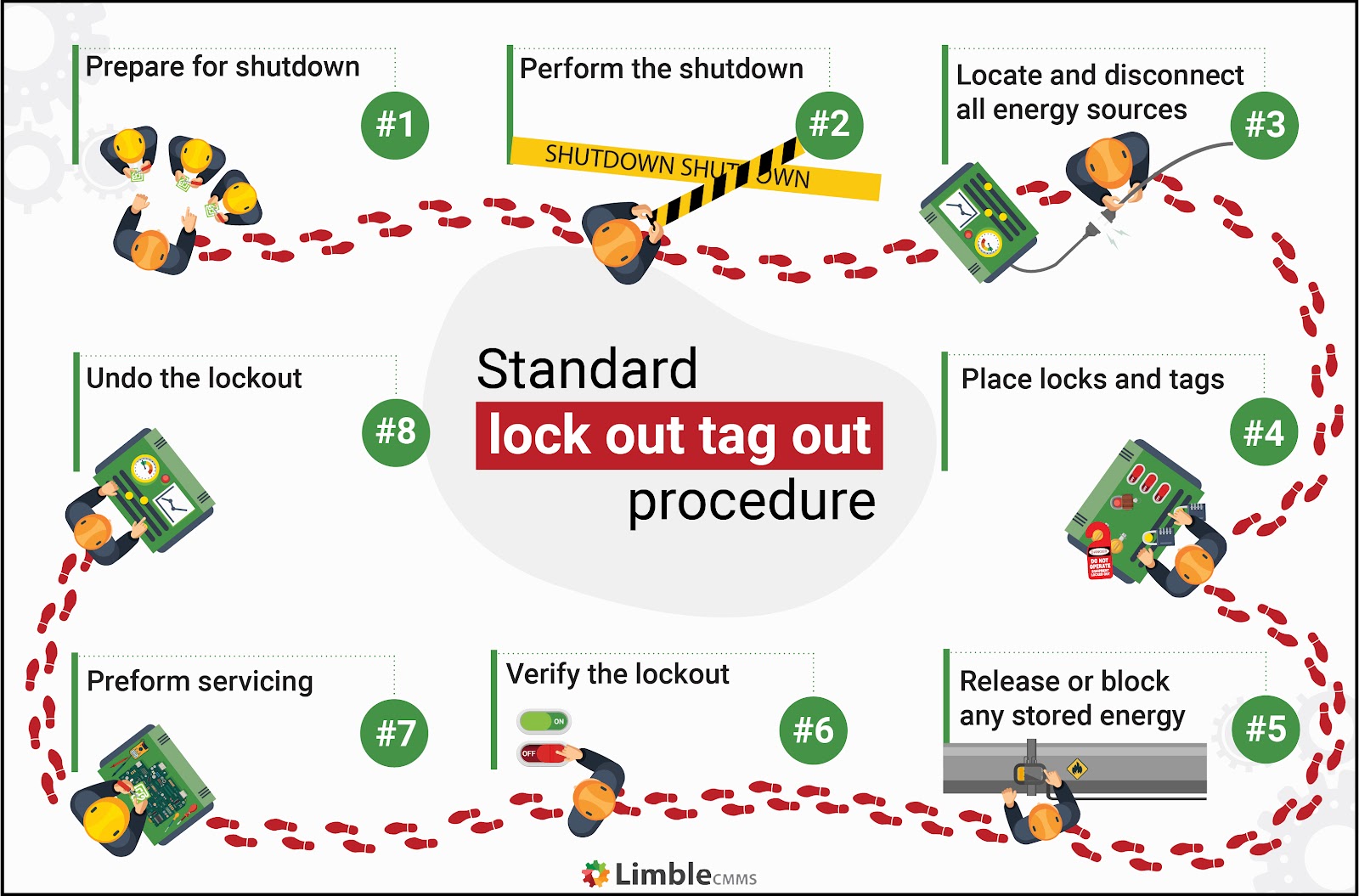
Every time a machine is serviced, energy sources—electrical, hydraulic, pneumatic, chemical, or mechanical—pose serious risks. Without proper isolation, an unexpected startup can cause fatal injuries. That’s where a lockout tagout log sheet template becomes essential. It’s not just paperwork; it’s a legal and operational safeguard.
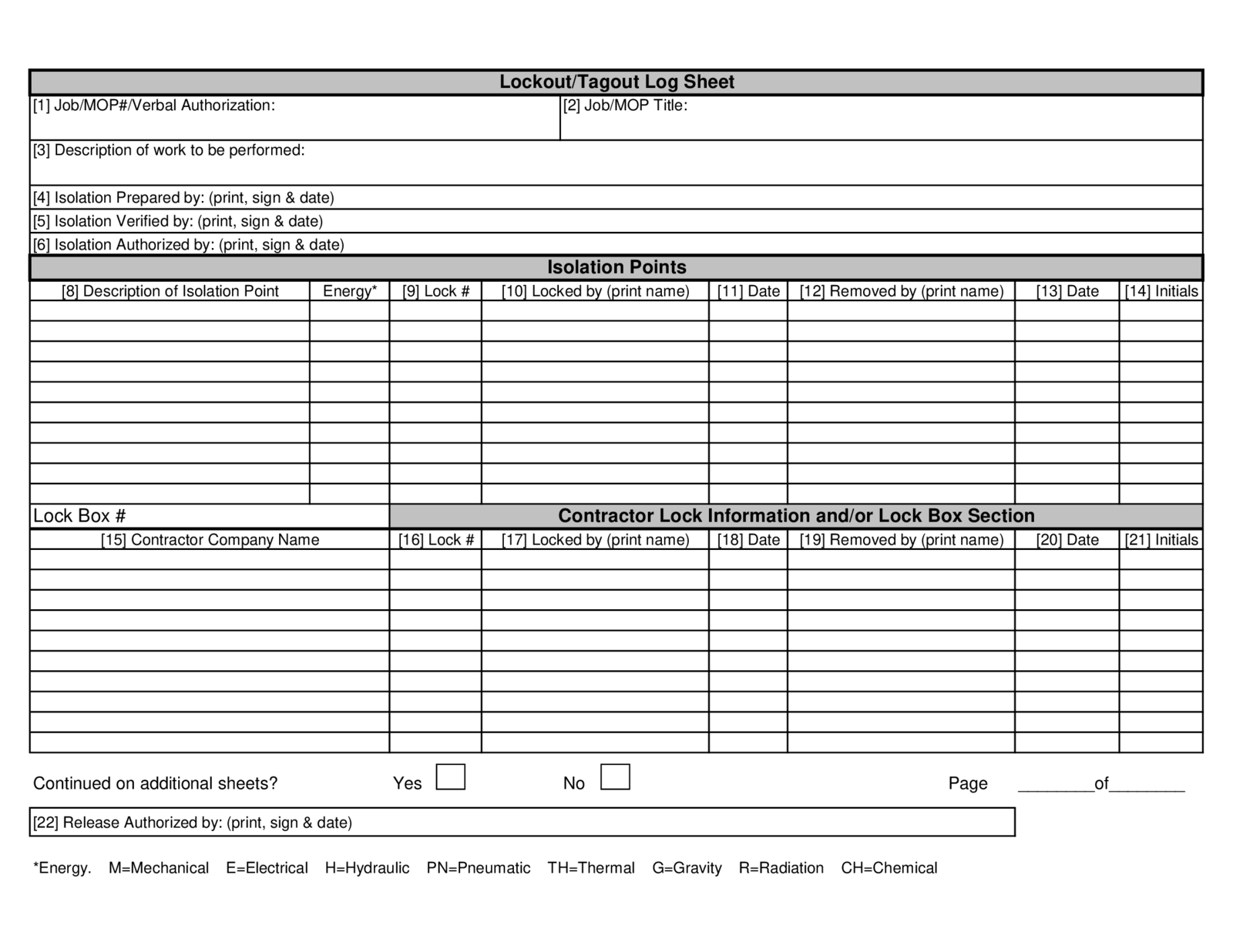
The log sheet records every LOTO event: who locked out equipment, when, why, and how it was verified. OSHA mandates documentation for energy control procedures under 29 CFR 1910.147. Companies that skip the log risk fines, downtime, and worst of all, worker harm. More importantly, a well-designed template streamlines communication across shifts, contractors, and departments.
Yet many teams still use blank notebooks, sticky notes, or no tracking at all. That’s a compliance time bomb.
This guide delivers a practical, ready-to-use lockout tagout log sheet template—and shows how to implement it correctly.
What a Lockout Tagout Log Sheet Actually Does
A LOTO log sheet isn’t a formality. It’s a living document that answers five critical questions during maintenance:
- What equipment was locked out?
- Specific ID, location, and machine name prevent confusion, especially in facilities with duplicate units.
- Which energy sources were isolated?
- Electrical breakers, hydraulic valves, steam lines—each must be listed and verified.
- Who applied the lock and tag?
- Personal accountability is vital. Only the authorized employee should remove their lock.
- When did the lockout begin and end?
- Time stamps help track maintenance duration and identify delays.
- Was zero energy verified?
- Confirmation that the machine can’t start—tested by pressing start buttons or relieving pressure.
Without this data, supervisors can’t confirm if work is complete or if equipment is safe to re-energize.
Key Components of an Effective LOTO Log Sheet Template
A good template balances completeness with usability. Overcomplicated forms get ignored. Missing fields create liability. Here are the must-have sections:
Equipment Identification
- Machine name
- Asset or ID number
- Location (floor, line, zone)
- Primary energy source(s)
Lockout Details
- Date and time of lock application
- Authorized employee name and ID
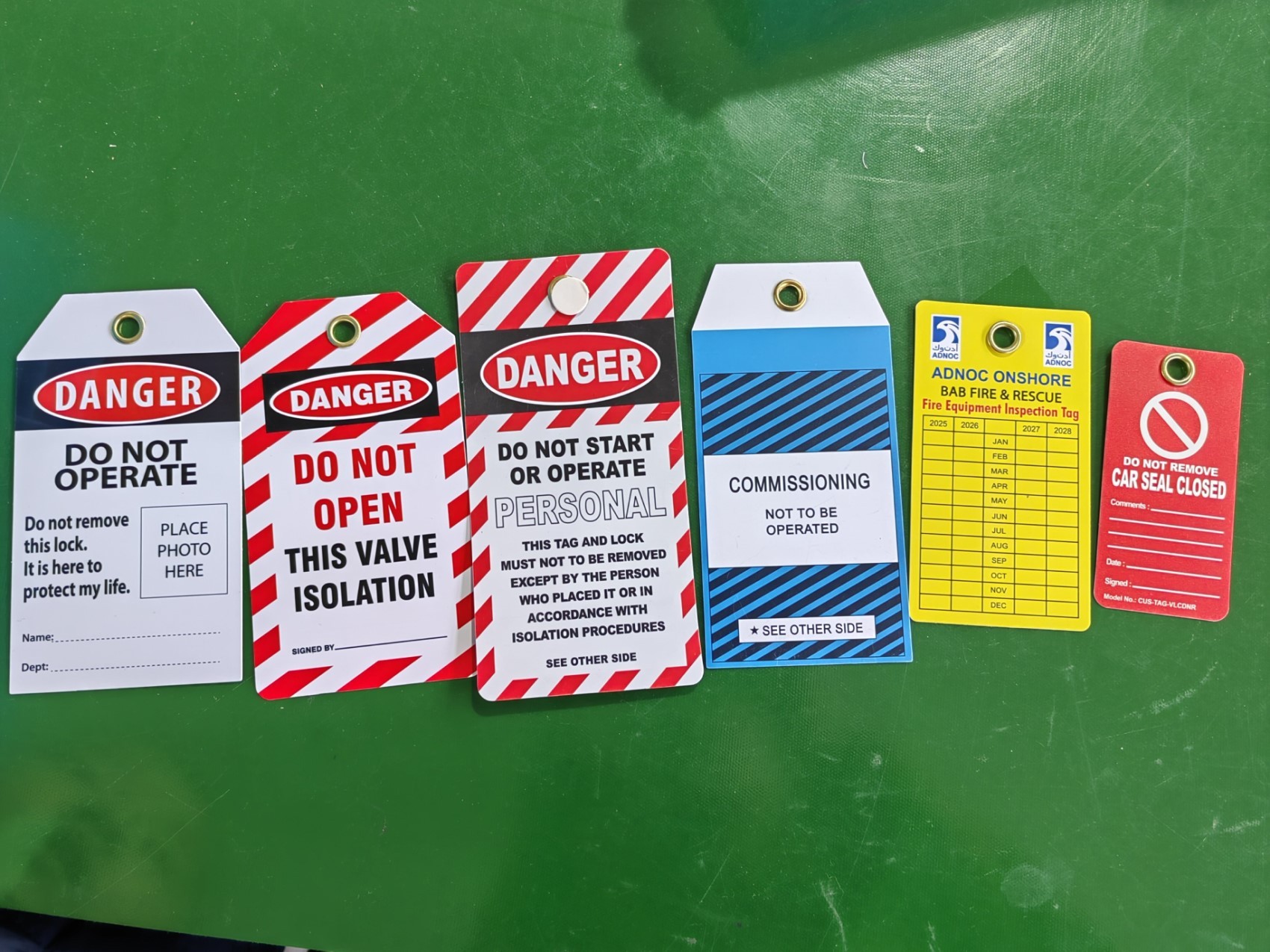
- Type of lock used (e.g., hasp, valve lock, circuit breaker lock)
- Tag number and description
Energy Isolation Verification
- List of isolated energy sources
- Method of isolation (e.g., breaker off, valve closed, bleed line)
- Verification method (e.g., test run, pressure gauge, visual check)
Release Information
- Time of release
- Verification of safe conditions
- Name of releasing employee
- Supervisor approval (if required)
A well-structured template ensures nothing is missed during high-pressure maintenance windows.
Common Mistakes That Undermine LOTO Logs
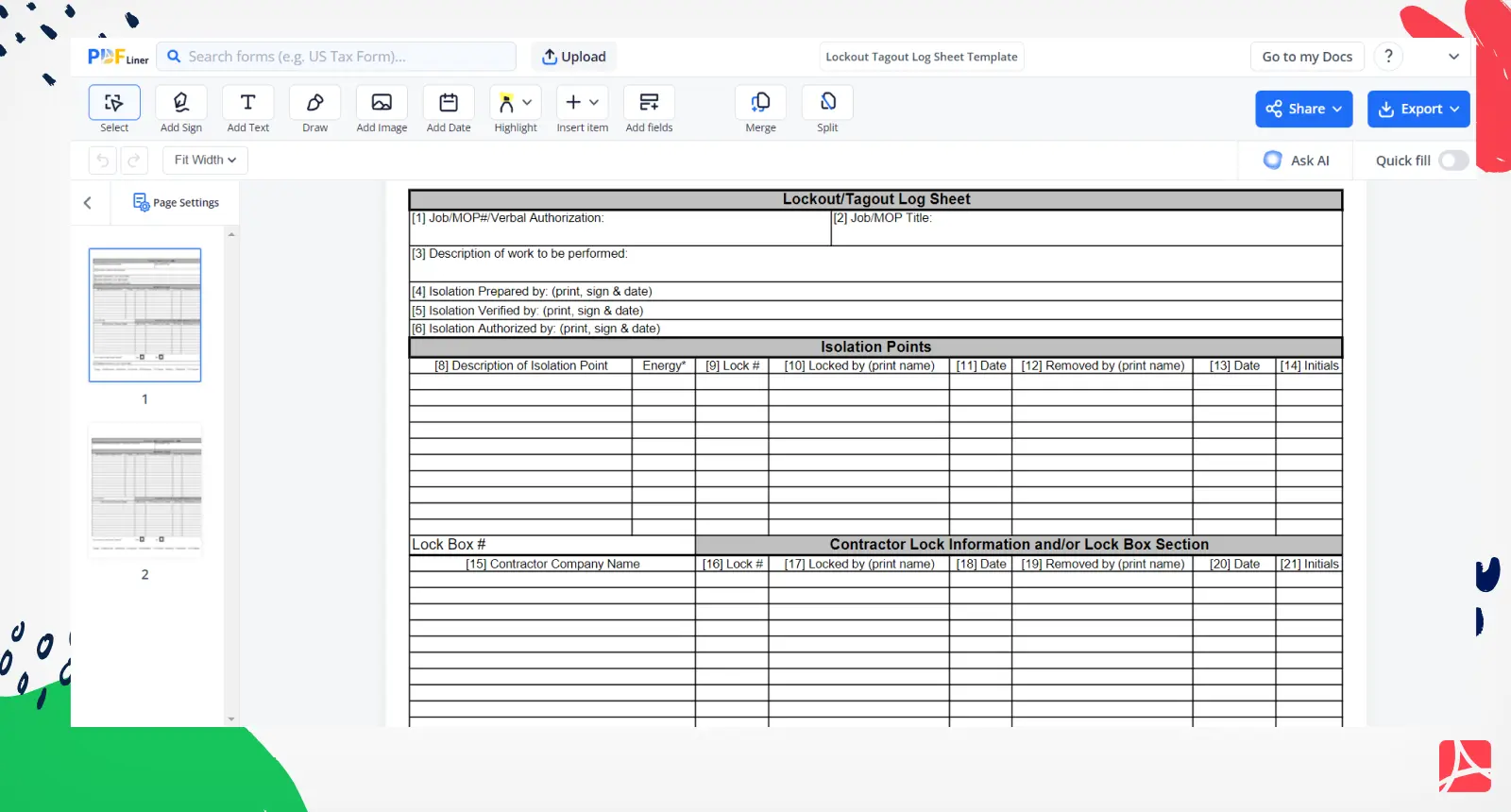
Even teams with templates make errors that compromise safety:
1. Using Generic or Handwritten Logs Blank notebooks lack structure. Illegible handwriting causes misinterpretation. A standardized digital or printed form eliminates ambiguity.
2. Skipping the Verification Step Recording the lockout is pointless if you don’t confirm zero energy. The log must include a checkbox or line for verification, signed by the technician.
3. Failing to Update Across Shifts Night crews often restart equipment unaware of ongoing maintenance. A visible, up-to-date log sheet posted near the machine or in a central logbook prevents this.
4. Not Archiving Old Entries OSHA requires employers to certify that energy control procedures are inspected at least annually. Archived logs provide proof of compliance during audits.
5. Relying on Memory Instead of the Log Technicians may think, “I’ll remember,” but fatigue or distractions lead to mistakes. The log must be filled in real time—no exceptions.
Real-World Use Case: Preventing a Near-Miss in a Packaging Plant
A technician at a food packaging facility was replacing a conveyor motor. He applied a lock and tag but didn’t log it. On the next shift, a supervisor, unaware of the maintenance, tried to start the line. The motor engaged mid-repair.
Thankfully, the worker wasn’t injured—but the audit revealed no LOTO log existed.
Afterward, the plant adopted a mandatory log sheet template. Now: - All LOTO events are recorded on a master form at the control room. - Each entry includes photo verification via tablet. - Logs are reviewed weekly by safety officers.
Downtime from miscommunication dropped by 68% in six months. More importantly, safety incidents dropped to zero.
This isn’t unique. Facilities that treat the log sheet as a core safety tool—not just a checkbox—see measurable improvements.
Free Lockout Tagout Log Sheet Template (Ready to Use)
Below is a practical, printer-friendly LOTO log sheet template. Copy it into Word, Google Docs, or print as-is.
LOCKOUT TAGOUT LOG SHEET
Equipment Name: _________________________ Asset ID: _______________ Location: _______________ Primary Energy Source(s): ☐ Electrical ☐ Hydraulic ☐ Pneumatic ☐ Chemical ☐ Mechanical ☐ Other: ________
| Date | Time In | Employee | Lock/Tag # | Energy Sources Isolated | Verification Method | Supervisor |
|---|---|---|---|---|---|---|
Release Time: _______ Verified Safe: ☐ Yes ☐ No Released By: ___________________ Signature: ________
Notes: _________________________________________________

Tips for use: - Print as a wall-mounted form near high-risk equipment. - Use carbon-copy sheets so one stays on-site, one goes to safety office. - Digitize using tools like Google Forms or safety software for real-time tracking.
Digital vs. Paper LOTO Logs: What Works Best?
The debate isn’t about technology—it’s about reliability and access.
| Factor | Paper Logs | Digital Logs |
|---|---|---|
| Setup Cost | Low (printer + paper) | Higher (software, devices) |
| Real-Time Access | No – physical location required | Yes – cloud-based, mobile access |
| Audit Readiness | Requires scanning/filing | Auto-saved, searchable, exportable |
| Risk of Loss/Damage | High (fire, water, misfiling) | Low (backups, encryption) |
| Multi-Shift Clarity | Limited (can’t update remotely) | High (live sync, notifications) |
Bottom line: Small shops with stable teams can succeed with paper. Larger facilities, contractors, or 24/7 operations benefit from digital.
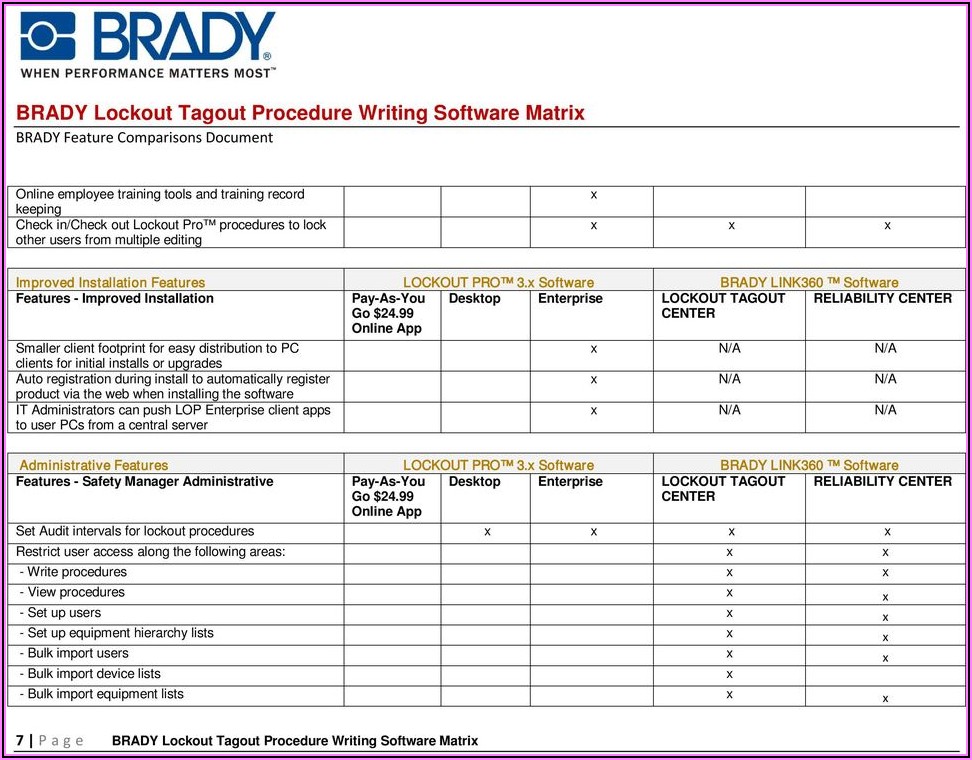
Top 5 Tools for Managing LOTO Logs Digitally For teams ready to go digital, here are five reliable platforms:
- EHS Insight
- - Cloud-based safety management
- - Custom LOTO log forms, audit trails, mobile app
- - Best for mid to large manufacturers
- Fragkis LOTO Software
- - Affordable, user-friendly interface
- - Barcode support for locks and equipment
- - Ideal for small to mid-sized plants
- Intelex (by Industrial Scientific)
- - Enterprise-grade EHS suite
- - Integrates with CMMS and ERP systems
- - Strong for compliance reporting
- LockOut/TagOut Pro (Android/iOS)
- - Mobile app for field teams
- - Offline mode, photo capture, PDF export
- - Great for maintenance contractors
- Google Workspace + Custom Forms
- - Free or low-cost
- - Build your own LOTO form with Google Forms
- - Data stored in Sheets, easy to analyze
Each offers a way to replace error-prone paper logs with structured, auditable records.
How to Train Teams on Using the LOTO Log Sheet
A template is useless without training.
- Conduct a 20-minute drill during safety meetings:
- Walk through a mock maintenance scenario.
- Have employees fill out the log sheet together.
- Emphasize: No work starts without a completed log.
Post the template near breaker panels and machine control stations.
Include log completion in performance reviews. Recognize teams with 100% compliance.
Remember: culture beats policy. When logging becomes routine, safety follows.
Final Thoughts: Your LOTO Log Sheet Is a Legal Shield
A lockout tagout log sheet template isn’t overhead—it’s a frontline defense. It protects workers, satisfies OSHA, and prevents costly downtime. Whether you use paper or digital, the key is consistency.
Start today: download or recreate the template above. Test it on one machine. Refine it. Scale it.
Because when energy isn’t controlled, the next incident isn’t a possibility. It’s a countdown.
Take action now—fill out your first log before the next maintenance shift.
Frequently Asked Questions
What should be included in a lockout tagout log sheet? A complete log includes equipment ID, employee name, lock/tag numbers, energy sources isolated, verification method, timestamps, and release details.
Is a LOTO log sheet required by OSHA? While OSHA doesn’t mandate a specific log sheet, it requires documentation of periodic inspections and employee training. A log sheet provides essential proof of compliance.
Can I use a digital LOTO log? Yes. Digital logs are accepted if they are secure, tamper-proof, and accessible for audits.
Who is responsible for filling out the LOTO log? The authorized employee performing the maintenance must complete the log, though supervisors may verify entries.
How long should LOTO logs be kept? OSHA requires at least one annual inspection of energy control procedures. Retain logs for a minimum of one year; two to three years is recommended for liability protection.
Should contractors use the same LOTO log? Yes. Contractors must follow site-specific procedures and use the same log system to ensure continuity and safety.
Can multiple employees lock out the same machine? Yes. Each worker applies their own lock and tag. The log should list all individuals involved in the lockout.
FAQ
What should you look for in Lockout Tagout Log Sheet Template – Free Printable Guide? Focus on relevance, practical value, and how well the solution matches real user intent.
Is Lockout Tagout Log Sheet Template – Free Printable Guide suitable for beginners? That depends on the workflow, but a clear step-by-step approach usually makes it easier to start.
How do you compare options around Lockout Tagout Log Sheet Template – Free Printable Guide? Compare features, trust signals, limitations, pricing, and ease of implementation.
What mistakes should you avoid? Avoid generic choices, weak validation, and decisions based only on marketing claims.
What is the next best step? Shortlist the most relevant options, validate them quickly, and refine from real-world results.